
PROFESSIONAL PAINTERS LONDON
Exterior painters in London.
A better first impression.
The outside of a property has a different job from the rooms within it. It has to look right, but it also faces rain, sunlight and changing temperatures. Whether you are considering a front elevation, an outside wall or exterior woodwork, the sensible starting point is the condition of the surface and how it can be reached safely.
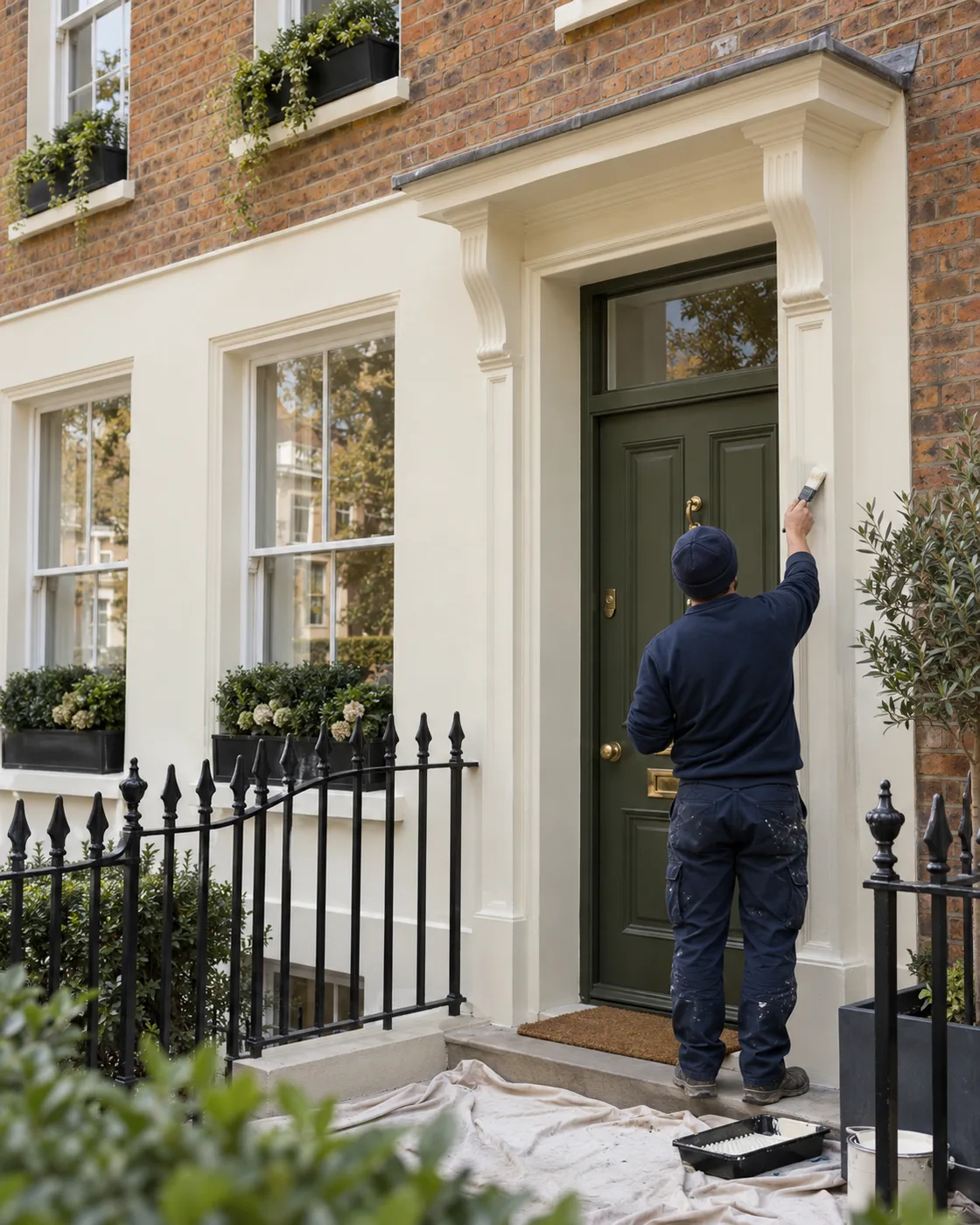
Start with the surface, not the colour card
Take a close look at the areas you want painted before deciding on a finish. Flaking paint, open joints, staining and uneven patches each tell a different story. Describe what you have noticed and whether the area has been repaired or repainted recently. That helps make the survey more useful.
An exterior refresh should not become a way of hiding an unresolved problem. If a wall remains wet or the old coating keeps breaking down, the cause needs to be discussed. The painting quote can then reflect work that is suitable for the condition found, rather than a colour change that leaves the underlying issue untouched.
A front elevation, a wall or a smaller job
Not every exterior project covers a whole building. You may want the front of your home refreshed, one outside wall repainted or selected exterior details brought into line with the rest of the property. Make a note of the exact areas, including sides that are not visible from the street.
Mention different materials separately. A rendered wall, a timber frame and a metal detail do not necessarily call for the same preparation or coating. If you are unsure what a surface is, there is no need to guess; photographs and the onsite inspection can help establish what needs to be considered.

Access makes a difference to the plan
The height of a surface is only one part of access. A narrow side passage, a neighbouring boundary, planting close to a wall or a busy entrance may affect how the work can be approached. Tell us about these details when arranging the survey, including anything that must remain usable while painting takes place.
Do not assume that equipment, access arrangements or permissions are already included in a rough estimate. Ask how the proposed areas would be reached and what the quotation covers. If your building has a managing agent or shared external areas, check who can authorise the work and who needs to be kept informed.
Weather and drying time need room in the schedule
Outside work depends on conditions. A date in the diary does not remove the need to check whether a surface is dry enough or whether the selected product can be applied in the forecast weather. Discuss how the team handles a change in conditions before making plans around a fixed completion day.
Allow some flexibility if other work depends on the painting being finished. Garden work, exterior cleaning and the installation of fittings can affect access or the freshly painted surface. A coordinated plan is more useful than several appointments made independently, particularly when the job involves more than one elevation.
Choosing an exterior finish
Colour should work with the parts of the property that are staying: brickwork, roofing, windows, paving and neighbouring surfaces. Look at a sample outside rather than under indoor lighting. A shade that appears restrained in a room may feel quite different on a large elevation in bright daylight.
Discuss the suitability of the coating for the material and the existing finish. Ask what preparation is needed and whether any chosen product changes the schedule. If you already have a specified colour or material requirement, share it before the quotation is confirmed. That is particularly helpful where a landlord, freeholder or building manager must agree the choice.
What to include when requesting a quote
Give us your postcode, the parts of the property to be painted and an honest description of their condition. Include approximate heights where you know them, but do not climb or take risks to gather measurements. Mention access limitations, outside fittings and any previous repairs that may be relevant.
The survey is the place to clarify the work, protection, materials and access arrangements. Ask whether the price includes each elevation and the smaller details that matter to you. Keep a copy of the agreed scope so the finished work can be reviewed against it, rather than against different recollections of the first conversation.
Looking after the completed work
Once the painting is finished, ask what you should know about the initial drying period and any restrictions on cleaning or attaching fittings. Keep the details of the coating and colour with your property records. They are useful if another section needs attention later.
Look over the agreed areas together before the job is closed. An exterior surface is seen from several angles and distances, so make time to check both the overall appearance and the accessible details. If you also need rooms refreshed indoors, discuss a separate interior painting scope rather than assume it is part of the exterior quotation.
Questions before you book.
Can I have only the front of my property painted?
Discuss the elevation or specific outside surfaces you want included. A smaller job can be assessed without treating the entire building as the scope.
Can you confirm a finish without visiting?
The surface condition and access need to be understood. An onsite survey helps confirm the preparation, materials and quotation for the work.
LET’S TALK ABOUT YOUR PROPERTY
A clear plan.
Starts with a call.
Tell us about your postcode, your rooms and the finish you have in mind.
Arrange a free onsite quote.