
PROFESSIONAL PAINTERS LONDON
Office painters in London.
Fresh thinking, fresh walls.
An office refresh has to work for the people using the space, not just for the colour scheme. Staff need a practical place to work, visitors need a clear route in and the person organising the job needs to know what will happen when. We start with those details, then discuss the walls, ceilings and woodwork you want changed.
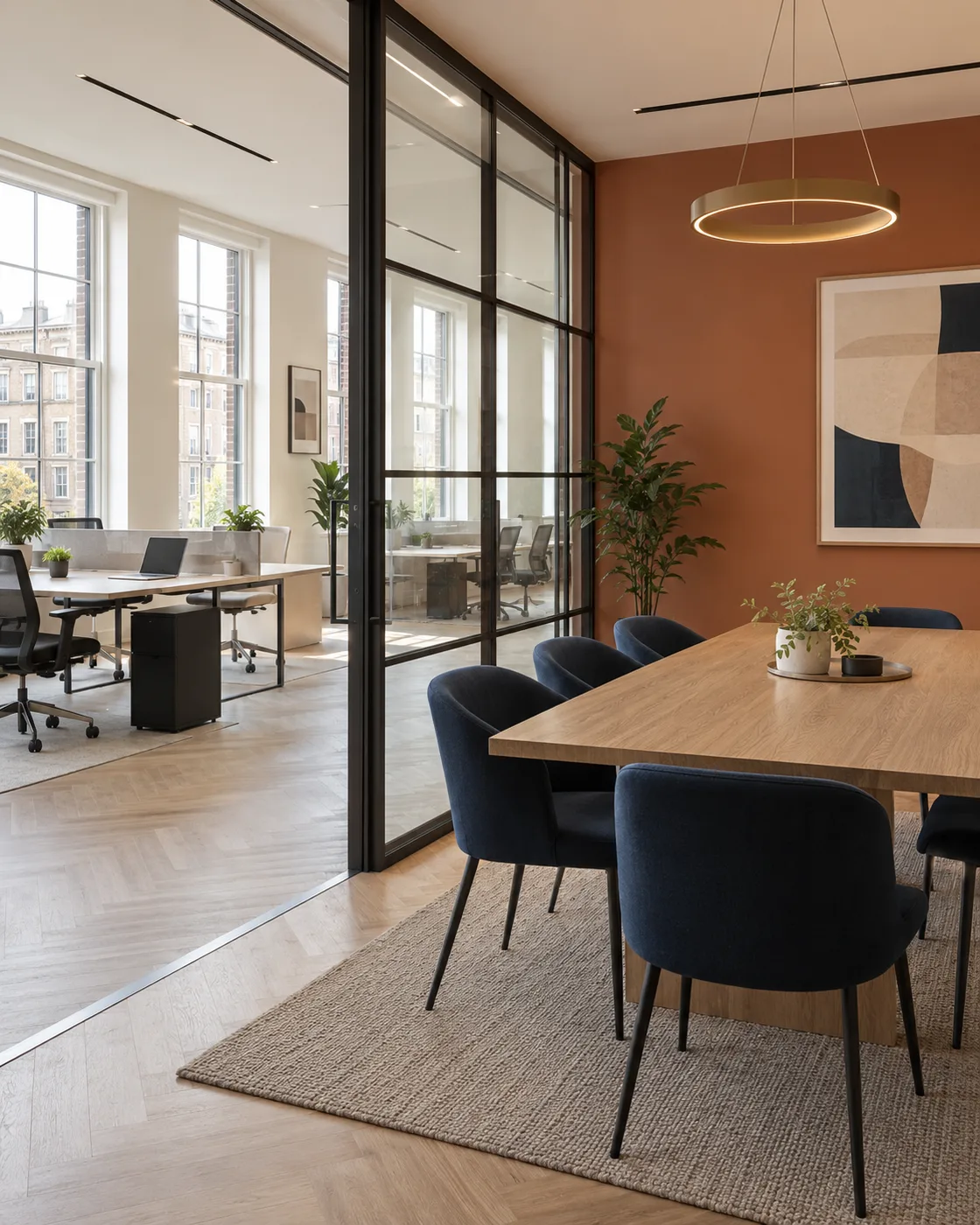
What do you want the office to do differently?
A reception area may need to make a more considered first impression. Meeting rooms might feel tired, while the everyday workspace needs a lighter, cleaner background. Describe each part of the office separately rather than ask for a single treatment throughout without considering how the rooms are used.
If the decorating is part of a wider change, share the plan. New furniture, signage, lighting or a different layout may affect the order of work and the areas that need attention. A clear brief gives the team something practical to price and helps avoid painting a wall that will immediately be disturbed by another installation.
Plan around the working day
Tell us when the office is busiest and which rooms cannot be taken out of use at the same time. Include regular meetings, visitor appointments and the areas used for deliveries. These are details worth discussing before the work is booked, rather than leaving the decorators to discover them on arrival.
Ask about a sensible sequence for the job and confirm the working arrangements offered for your project. Availability is agreed for the actual scope and dates; it should not be assumed from a general description of flexible service. The plan also needs to allow for preparation, drying and the time required to return a room to normal use.

Desks, equipment and the small access details
Offices contain things that cannot simply be pushed into another room. Computers, cabling, printers and confidential papers all need arrangements that work for your team. Decide who will deal with equipment and personal items, and identify anything that must not be moved or disconnected.
Explain the building’s entry procedure, lift access, loading arrangements and the person who can answer questions during the day. If there is a facilities manager, bring them into the discussion early. A decorator should not have to guess which door can be used or wait for a decision about a piece of equipment that was never mentioned.
A colour scheme that belongs to the business
Brand colours can be a useful starting point, but they do not have to cover every wall. Think about where a stronger colour will be seen, what the lighting does to it and how it sits beside flooring and furniture. A meeting room and a reception desk may call for different emphasis.
Bring colour references or a specification if you already have one. If several people need to approve the finish, agree who makes the final choice and when it must be made. Small samples are easier to change than a large wall, and a settled decision helps keep the rest of the decorating plan clear.
Preparation and the surfaces in daily use
Look beyond the areas visitors see first. Corridors, door frames and walls beside chairs can show wear that is less obvious in photographs. Identify those areas during the survey and discuss what preparation they need. A new finish will look better when the condition beneath it has been properly considered.
Ask which walls, ceilings, doors and other woodwork are included. Where a room has shelving or fixed fittings, explain whether they are staying in place. The quote should describe the work sufficiently clearly that you can distinguish the painting scope from any repairs, installations or furniture changes being handled separately.
Making the quotation useful for approval
The person obtaining a quote may need to present it to somebody else. Provide the room list, the proposed surfaces, any material specification and the timetable you are working towards. If the budget is being agreed in stages, explain which areas are essential and which are optional.
Ask for the scope to reflect that distinction. It is easier to approve a clear set of works than a broad figure for an office refresh with no explanation of what changes. Keep the agreed access and scheduling arrangements alongside the quotation so the internal approval does not lose the practical details that make the work possible.
Returning the space to everyday use
Before the area is put back into service, review the paintwork and the agreed surfaces with the team. Ask about the drying period and when furniture can be returned close to the walls. Do not schedule a full meeting room simply because the last coat has been applied; confirm the room is ready for its intended use.
Keep a record of the colours and finishes. If another floor or room is decorated later, that record makes it easier to maintain a consistent appearance. For a wider business property, look at our commercial painting service and discuss whether it fits the rest of your premises.
Questions before you book.
Can the work be planned around office hours?
Explain your opening hours and the rooms you need available. Scheduling arrangements are discussed for the scope and dates of your particular project.
Can you repaint reception and meeting rooms only?
Yes. Specify the areas you want refreshed so the survey and quote can focus on those rooms rather than the whole office.
LET’S TALK ABOUT YOUR PROPERTY
A clear plan.
Starts with a call.
Tell us about your postcode, your rooms and the finish you have in mind.
Arrange a free onsite quote.