
LONDON HOMES & WORKSPACES
Painters and Decorators in Islington
You may have a room full of paint samples and still be unsure which one to choose. Try a different starting point: identify the surfaces that need work, the furnishings that stay and the light you actually use. Our painters and decorators in Islington can discuss that brief with you, so a colour decision becomes part of a considered room refresh rather than a guess made before anyone has looked at the wall.
Samples checked in your light
Preparation before colour
Clear boundaries for the work
Choose the work your room needs.
Painting and decorating
Colours and surfaces considered together
Mould removal
Separate assessment and treatment
Exterior painting
Assess painted surfaces outside
Interior painting
Walls, ceilings and finishing details
YOUR PROPERTY
Colour starts with the fixed parts of the room
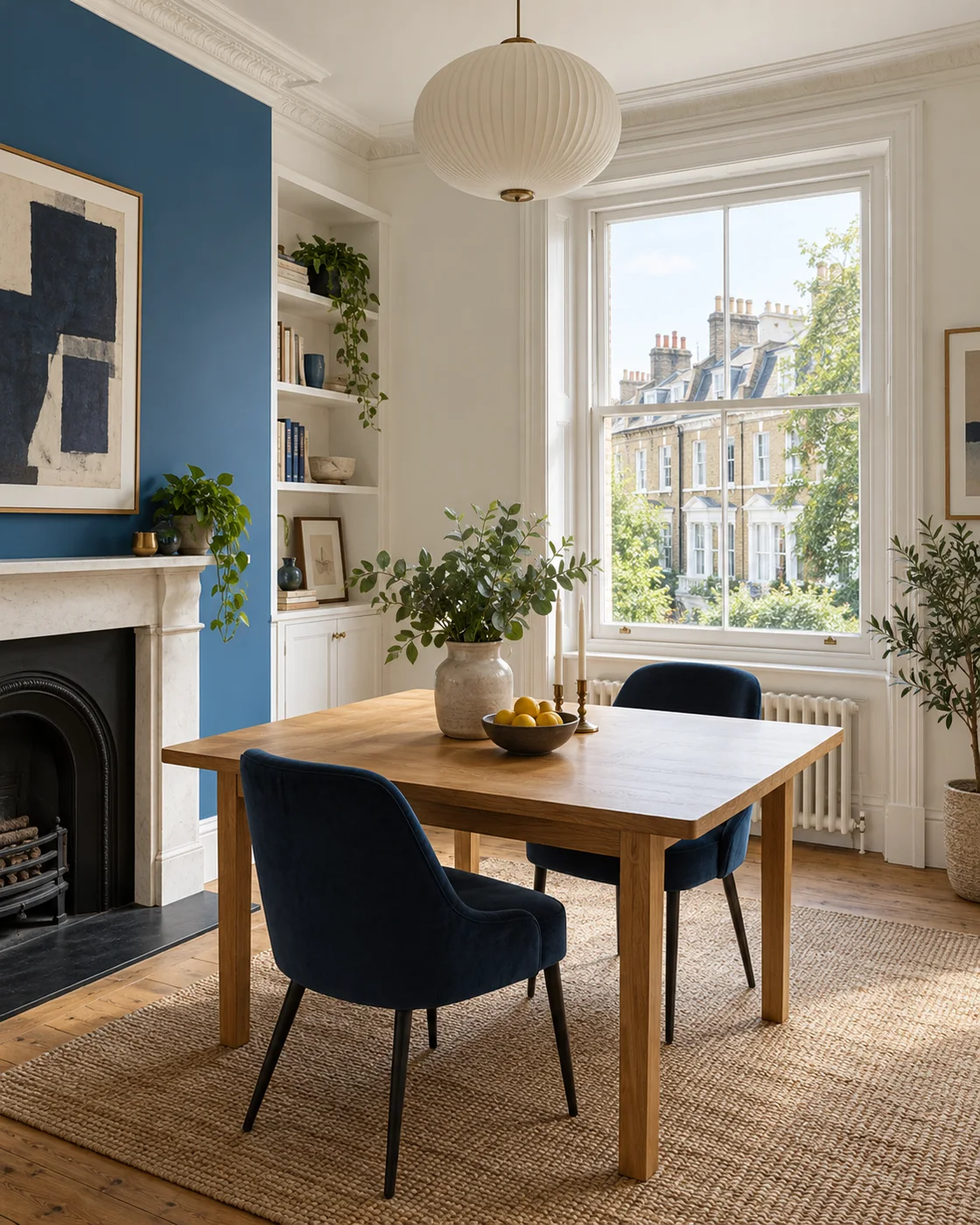
Check a sample next to the floor, a fitted cupboard and the largest piece of furniture. Look from the doorway, then from your normal seat. A blue that feels balanced across a small patch might become too dominant behind a desk; a softer shade may give the things you already own more breathing room.
Choose the actual product and finish rather than approve a screenshot alone. painting and decorating can bring different surface treatments together: quieter walls, a more defined door and a clean ceiling. They need not be identical to feel related.

YOUR PROPERTY
Define what needs filling, sanding or another repair
Colour will not straighten a rough patch or remove raised old paint at an edge. Show us repairs, old fixing points and the places that catch the light unevenly. Ask how those surfaces are being prepared, including appropriate filling and sanding, before the painting scope is settled.
Be explicit about the limits of the job. A damaged fitting, a sticking door or continuing damp may require something other than decoration. Recurring mould belongs in a separate mould removal conversation; painting over a concern is not a substitute for assessment. Keeping those boundaries clear protects the logic of the whole project.
YOUR PROPERTY
Period detail and external changes are different questions
Islington Council’s Barnsbury guidance identifies notable late-Georgian and early-Victorian terraces and squares. If your property retains doors, cornices or other detail, decide what should be preserved before choosing a new finish. That does not mean every room in the borough requires the same treatment.
For external changes, check the property’s designation and current council guidance. The council notes that Article 4 directions can affect alterations including painting outside brickwork. Do not assume that an interior colour choice and an exterior painting alteration carry the same requirements. A condition survey is not a replacement for a property-specific consent check.
YOUR PROPERTY
A flat needs a route into it, not just a wall measurement
Explain the entrance, stairs or lift and the person organising attendance. In a shared building, contractor access and a place for materials can matter even when the room itself is small. Keep sensitive entry information for the arranged visit rather than a general message.
Indoors, protect a workable area for the household. A bedroom used for evening calls or a living room doubling as a study needs a plan for belongings and equipment. interior painting is easier to organise when those decisions are made with the surface list, instead of adding them after the date has been agreed.
Compare samples under the lamps you use.
Separate a finish choice from a repair issue.
Confirm authorisation before altering a rented room.

PRACTICAL DETAILS
Understand the quote before reducing the scope
The amount of preparation, the selected coatings, woodwork and access all affect the work. If you want to keep the budget focused, decide which room or surfaces matter most. Ask about a smaller complete scope rather than quietly remove the tasks needed to prepare it properly.
At the onsite visit, discuss materials and what is excluded. We then agree the work and scheduling before preparation begins. The finished surfaces are reviewed together, with product details and drying arrangements explained at handover. This gives the project a clear beginning and end with the practical details settled before work starts.
PEOPLE & PROCESS
Confirm approval for the particular surface
For a rented room, identify who can approve the palette before booking. Keep that decision separate from an exterior colour proposal: Islington’s conservation guidance says some areas have Article 4 directions controlling alterations, such as painting exterior brickwork. Check the map and the direction applying to the address rather than relying on the room’s interior permission. Bring the authorised specification to the consultation and identify which surfaces remain excluded, so colour, access and approval refer to the same job.
Colour, edge and light.
Look closely at the junctions between surfaces: the edge beside a door, the line under a ceiling and the finish against the floor.

Islington: questions before decorating.
Why does a paint shade look different on my screen?
A photograph and display change how colour is seen. Use them for direction, then inspect actual samples against the room’s fixed materials and lighting.
Can the walls stay neutral with a stronger door colour?
They can be considered together. Check the transition into adjoining rooms and specify the door faces, frame and surrounding woodwork you want included.
What if there are many old picture fixings?
Point them out at the survey. Agree the preparation and intended finish across the surface rather than assume a colour change hides every hole.
Is a shared landing part of my flat’s quote?
Only include it after identifying who can authorise the communal work. Your own room and shared surfaces may need different approvals and access arrangements.
Can you remove mould without repainting the room?
Mould removal is a standalone assessment and treatment service. Any subsequent cosmetic work is considered separately, according to the surface and condition.
Must outside brickwork be treated like interior plaster?
No. Material, access and relevant property controls need their own assessment. Consult council guidance before approving an external alteration.
Nearby areas
Angel · Camden Town · Finsbury Park · Stoke Newington
LET’S DISCUSS THE DETAILS
Start with the room you have.
Call about the Islington room you are trying to get right. Tell us the surfaces first; we can discuss colour, access and the quote from there.