
PROFESSIONAL PAINTERS LONDON
Mould removal in London.
Assessment. Treatment. Advice.
Our mould removal service is separate from painting and decorating. We assess the affected area, look at moisture and airflow, then agree treatment suited to the surface and the extent of the problem. Call with your postcode and describe where the mould appears, whether it has returned after cleaning and any leak or damp issue you already know about.
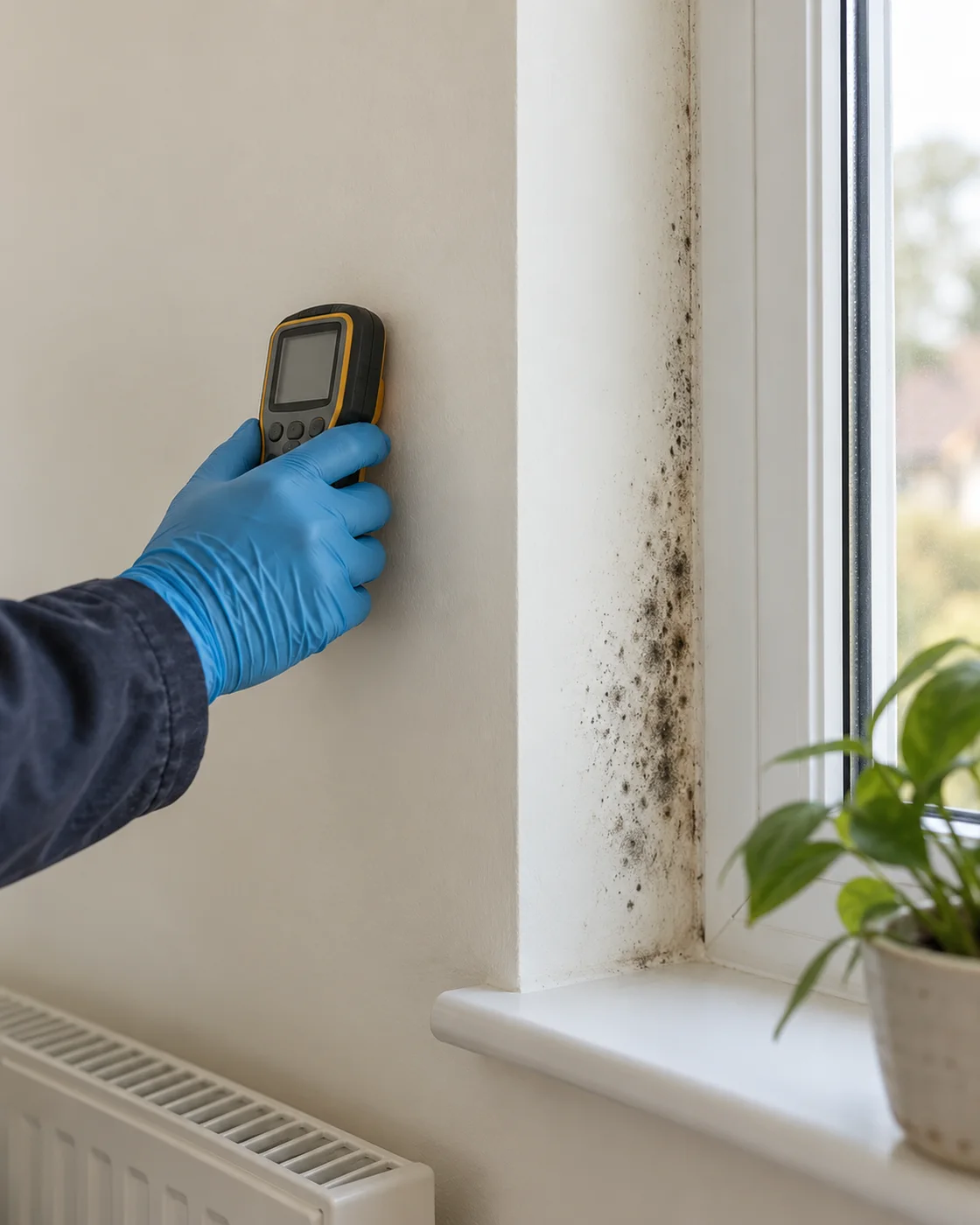
A closer look before treatment
The visit begins with the affected room and its condition. Moisture levels, airflow and signs of leaks or outside damp help form a picture of what needs attention. We also ask about when the marks appeared and whether the same area has been treated before.
Show the visible areas without disturbing them to gather more information. Explain any work already carried out by another contractor and share available reports. Your account of the problem helps make the assessment useful, particularly when the mould returns in a place that looks better for a short time after cleaning.
Removal and the reason for the moisture are different jobs
Getting rid of visible mould is not the same as resolving the reason it developed. Government guidance for England stresses the importance of identifying and addressing underlying causes, rather than dealing only with the marks on the surface. A recurring problem needs to be taken seriously.
The assessment should distinguish the affected finish from any building, ventilation or moisture issue that requires another kind of work. Ask which tasks can be included and which need a separate specialist or repair. It is better to know that distinction at the start than pay for redecorating that has to be undone because the source of moisture was left unresolved.
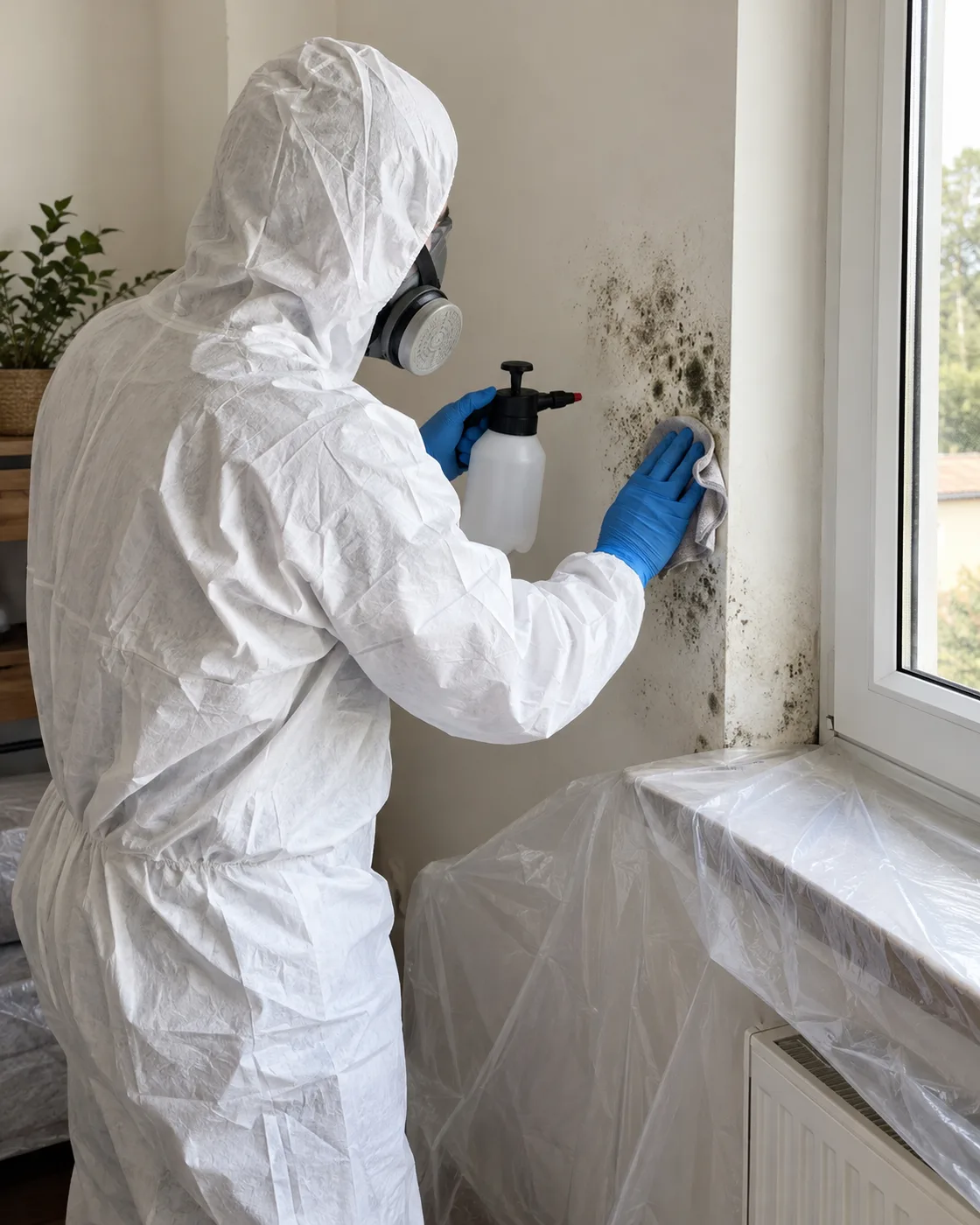
Removal suited to the surface
Treatment is selected after the area has been assessed. Walls, ceilings, window surrounds and finishes affected more deeply do not all present the same job. The surface and extent of the growth determine the proposed work, rather than one cleaning method being assumed for every enquiry.
The quote explains the areas and treatment included. More established problems may need further attention, while a moisture issue can require a separate repair or investigation. We discuss those distinctions before starting. Painting is not the removal method, and redecorating is only considered separately where the treated surface still needs a cosmetic finish.
Access and the people using the room
Tell us whether the property is occupied and which rooms the household depends on. If somebody needs particular arrangements around access or the work area, mention that when making the enquiry. The plan should allow the team to understand the practical circumstances before agreeing a visit.
Discuss belongings and furniture without assuming you should clear the affected area yourself. Ask what needs to happen before attendance and whether another room should be available while the agreed work is carried out. Do not make promises to occupants about when they can return until the working arrangements have been explained for that specific job.
If you rent or manage the property
If you are renting, report the damp or mould to the landlord or managing agent and keep a record of the concern. Explain whether somebody is already arranging an inspection or repair. A removal or decorating enquiry should not replace that conversation about the property itself.
For owners and managers, bring together the available information: reports, previous repairs, photographs and the occupier’s description of what has happened. Confirm who can authorise the work and who will provide access. A clear contact makes it easier to discuss the scope and avoids leaving the person living in the property to coordinate decisions they cannot make.
When painting becomes the next step
Redecorating should be considered after the affected area and any underlying issue have been properly assessed. Ask what condition the surface needs to be in before painting and what preparation will be required. A specialist coating is not a substitute for resolving a continuing source of moisture.
If painting is appropriate, keep that part of the scope clear. Walls, ceilings and woodwork may need different attention, and the original room colour may no longer be available. Discuss whether the plan is to restore the existing appearance or repaint a complete surface, so the finish does not become a separate decision made at the last minute.
What a useful quote should describe
Your enquiry can begin with your postcode, the rooms affected and a short account of when the mould appeared. Say if there has been previous treatment, a known leak or recent repair work. An honest description is more useful than trying to identify the type of mould from its colour.
The confirmed quote should state the areas, proposed work and any follow-on decorating. Check what is excluded and how further findings would be discussed. Keep the assessment and the treatment scope with your property records; they help if a later contractor needs to understand what has already been considered and carried out.
Keep an eye on what happens afterwards
Ask what follow-up is appropriate for the work agreed and who to contact if the marks return. Keep dated photographs of any new concern and describe whether it is appearing in the same place or somewhere different. That record gives the next assessment something more useful than a general recollection that the problem came back.
Damp and mould can affect health. If you are concerned about symptoms, seek advice from a healthcare professional; this page is a service enquiry guide, not a diagnosis. You can also read the government guidance linked below for the distinction between removing visible mould and dealing with the conditions behind it.
Questions before you book.
Do I have to book painting with mould removal?
No. Mould removal is a standalone service. Any painting required afterwards is discussed as a separate scope rather than treated as the removal method.
What happens before the treatment?
The affected surfaces and signs of moisture, airflow problems or leaks are assessed. The proposed treatment and any additional work are then explained for the condition found.
Can you promise the mould will never return?
No blanket promise is made. A lasting outcome depends on addressing the conditions behind the growth; treatment and any repair or further assessment are discussed accordingly.
LET’S TALK ABOUT YOUR PROPERTY
A clear plan.
Starts with a call.
Tell us your postcode, which areas are affected and whether the mould has returned after treatment.
Discuss a mould assessment and treatment quote.