
LONDON HOMES & WORKSPACES
Painters and Decorators in Dulwich
Sometimes a room feels tired because its individual parts no longer sit comfortably together. Fresh upholstery makes the old wall colour look flat, a ceiling has yellowed, or chipped woodwork draws attention away from everything else. Our painters and decorators in Dulwich approach those relationships as well as the paint itself. We help you define a finish that belongs with your home, without automatically changing the features you already enjoy.
Details considered with the walls
Samples assessed in your light
An agreed preparation allowance

A plan for every space.
Interior painting
Walls, ceilings and finishing details
Domestic painting
A defined scope for your home
Painting and decorating
Colours and surfaces considered together
Mould removal
Separate assessment and treatment
Commercial painting
Discuss access and operating needs
YOUR PROPERTY
Begin with the elements you want to retain
Put the floor, curtains, artwork and substantial furniture into the conversation before choosing a shade. Their undertones may be subtle, but they will remain visible beside every newly painted surface. A favourite fabric or piece of timber can be a more useful starting point than a fashionable colour name.
The painting and decorating brief should explain what the room needs to feel like and what is staying. Compare a small number of samples in the room instead of introducing a long list of unrelated options. Check them beside the fixed elements and under evening lamps. That gives the choices a context you can actually judge, rather than an attractive effect that exists only on a screen.
YOUR PROPERTY
Let architectural details remain legible
Where your home has panelled doors, cornices or shaped skirting, consider how their edges will look beside fresh walls. Existing paint build-up, chips and rough previous repairs may deserve attention even when you intend to retain the current colour. The condition matters more than whether an item is old or new.
An interior painting survey can include those details as distinct surfaces, with preparation and finish discussed separately. Do not assume that a broad wall specification covers every frame and decorative moulding. If you prefer a restrained palette, slight differences in sheen can still create a considered relationship between the walls and woodwork without making the room visually busy.
YOUR PROPERTY
Assess the ceiling before treating it as background
Ceilings are easy to overlook until the walls have been refreshed. An old patch, a fine crack or a change in texture may then become the most visible thing in the room. Look upward during the survey and explain whether any stain or defect has changed over time.
We discuss appropriate preparation for the surface found. Recurring staining or signs of moisture should be investigated rather than hidden beneath a new finish. Include ceiling edges, coving and any awkward access in the room list. This makes the domestic painting quotation more complete and gives you a clear reason for either including the ceiling or leaving it untouched.

YOUR PROPERTY
Separate decorative repairs from unresolved problems
Small holes and dents may be ordinary preparation items, while loose material or a damaged substrate can require a different allowance. Ask what filling, sanding and priming are included in the proposed price. A useful scope explains the expected work without pretending every concealed condition can be known in advance.
If there is visible mould, request an assessment through the standalone mould removal service. Treatment should be discussed independently of the colour scheme. Similarly, explain any recent building repairs and allow the condition of the affected surface to guide the next step. A paint coating is a finish; it should not be used as an explanation for a defect.
Choose samples beside existing textiles and flooring.
List decorative mouldings as well as broad wall surfaces.
Distinguish preparation defects from unexplained moisture.
YOUR PROPERTY
Plan a calm working arrangement
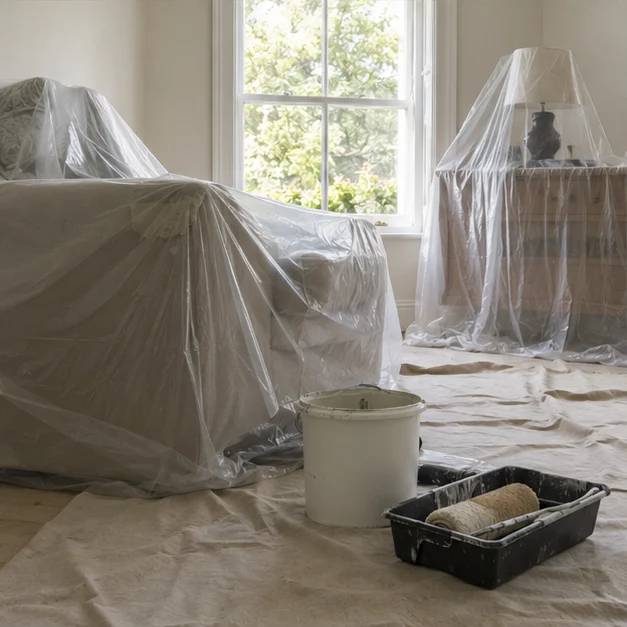
For a furnished room, identify fragile pieces and items that cannot easily be moved. Discuss who will remove objects, how the remaining furniture and floor will be protected, and where decorators will be able to work safely. A room can be carefully covered yet still too crowded for proper access.
We offer a free onsite consultation with decorators. Use that visit to agree the surfaces, materials and preparation, then discuss availability and the proposed order. If the room is used for work or family meals, describe the times when it is essential. Those practical requirements belong in planning before you commit to a decorating date.
YOUR PROPERTY
Keep an exterior colour change distinct from the room palette
If your Dulwich brief extends to outside joinery, check whether the address falls within a Southwark conservation area before approving the colour. The council lists Dulwich Village, Dulwich Wood and the Sunray Estate separately, with maps and area guidance. That is a reason to check the actual property, rather than treat every Dulwich home alike. Keep the exterior proposal separate from the interior samples and confirm applicable requirements before committing to materials or a date.
The finish meets the architecture.
A closer look at colour, preparation and finishing details.

Dulwich: questions before decorating.
Must walls and woodwork be the same colour?
No. Their colours and sheens can be coordinated without matching exactly; assess the combination in the room.
Can you retain my existing wall colour?
Discuss the product information and condition. A refresh still needs suitable preparation and a clearly agreed finish.
Should the ceiling be included automatically?
Inspect it alongside the walls, then make an explicit decision based on its condition and the overall effect.
What happens if preparation reveals more damage?
Additional work should be discussed and agreed rather than quietly added to the original decorating scope.
Can you work around valuable furniture?
Explain the pieces at the survey so removal, protection and adequate working space can be planned.
How is the final colour chosen?
Check samples against fixed furnishings in your daylight and artificial lighting before approving the palette.
Nearby areas
Peckham · Camberwell · Brixton · Streatham
LET’S DISCUSS THE DETAILS
Set the scope. Arrange the work.
If the details are stopping your Dulwich room from feeling finished, let us look at them together. Arrange an onsite conversation about a complete, considered scope.