
LONDON HOMES & WORKSPACES
Painters and Decorators in Kentish Town
A room can be freshly painted and still feel unfinished if its surrounding details have been ignored. A dark door, a chipped picture rail or a tired passage may make the new wall colour look like an isolated decision. Our painters and decorators in Kentish Town help you decide where a refresh should begin and end, with the condition of your own rooms guiding the work.
Character kept in view
Connected rooms planned together
Free onsite consultation
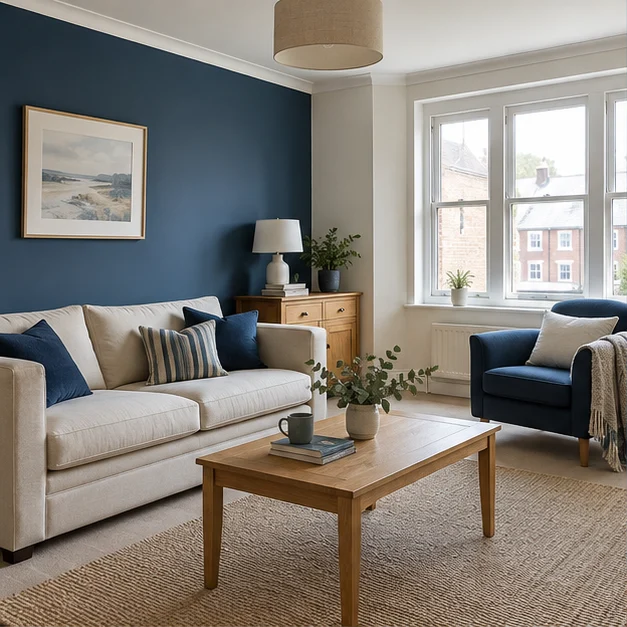
Choose the work your room needs.
Interior painting
Walls, ceilings and finishing details
Domestic painting
A defined scope for your home
Painting and decorating
Colours and surfaces considered together
Exterior painting
Assess painted surfaces outside
Office decorating
Plan around people and equipment
Commercial painting
Discuss access and operating needs
Mould removal
Separate assessment and treatment
YOUR PROPERTY
Follow the view through the doorway
Stand outside the room before choosing its colour. The first view may include a door edge, the adjoining corridor and part of another wall. If these stay unchanged, bring them into the discussion rather than judging a sample against a blank white card. A connected palette need not mean painting every space identically.
For interior painting, describe which doors are normally open and where you spend time. A reception room used mainly after work has different viewing conditions from a kitchen occupied throughout the day. Those small observations help define a practical brief without requiring a complete redesign of your home.

YOUR PROPERTY
Keep the details you enjoy
If your Kentish Town property contains older joinery or decorative plaster, note what you want to preserve before preparations start. A crisp line around a retained feature can matter more than introducing another contrasting colour. Existing layers and damaged edges should be inspected individually; the age or appearance of the street cannot establish their condition.
Camden maps the Kentish Town Conservation Area. Check your address before proposing exterior changes. Renewing existing painted joinery differs from coating an unpainted frontage; confirm the requirements for the actual surface before agreeing the work.
YOUR PROPERTY
Make the passage part of the plan
Corridors often connect all the rooms being decorated, yet receive the least attention during planning. Look at marks near switches, narrow corners and the wall beside furniture regularly carried upstairs. Decide whether the passage itself needs domestic painting work or whether it will simply provide access to other spaces.
Where people remain at home, explain when that route must be available. Agree what can be moved and where materials may be placed without blocking everyday circulation. A staged arrangement needs to be discussed against the actual layout and proposed finishes, including drying requirements, before you plan appointments or move belongings around the house.
YOUR PROPERTY
Read samples beside the retained timber
A floor or wooden door brings its own colour into a room. Put samples alongside it, then look from your usual sitting position. A grey that seems neutral on its own may turn noticeably cool next to warm timber. Conversely, a cream can look heavier once the evening lights are on.
Keep the number of samples manageable and record the product and shade for each. Compare larger painted samples if possible rather than relying entirely on a screen. In your painting and decorating discussion, mention furnishings that will return after the work; the finished room should suit those pieces as well as the temporarily cleared space.
Photograph the view between adjoining rooms before removing furnishings.
List every retained feature beside the wall you want painted.
Keep colour references with the room names, not loose in a drawer.
YOUR PROPERTY
Agree the preparation before the finish
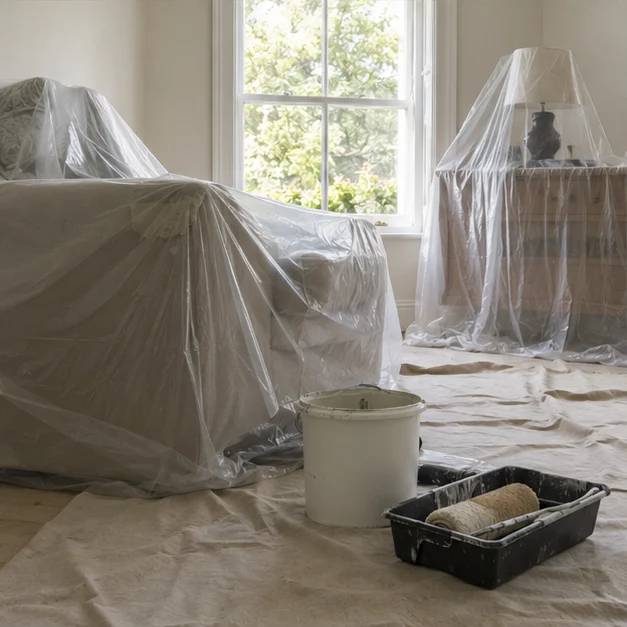
Walk through fixing holes, chipped corners and areas where previous repairs are visible. Some marks need a local preparation step; others may require a wider surface to be considered. We assess what is present and discuss filling, sanding and suitable materials where appropriate. A coat count alone does not explain the work needed.
If staining or dampness has appeared, raise it before selecting a decorative finish. Recurring moisture requires attention to its cause. Where mould treatment is needed, mould removal is a separate service to discuss, rather than an extra colour choice or an assurance that ordinary paint will resolve the underlying problem.
YOUR PROPERTY
Check the room in ordinary use
The final review should happen with the agreed scope in mind. Examine the surfaces that were included, their edges and the visible preparation areas. Look from normal positions as well as close up, because a room is experienced through light and movement rather than as a collection of isolated colour patches.
Keep the chosen finish details for future reference and ask about appropriate care for the product applied. If you intend to replace furnishings later, distinguish those future decisions from the completed decorating work. A clear record helps you maintain the result and plan subsequent rooms without having to reconstruct the original brief from memory.
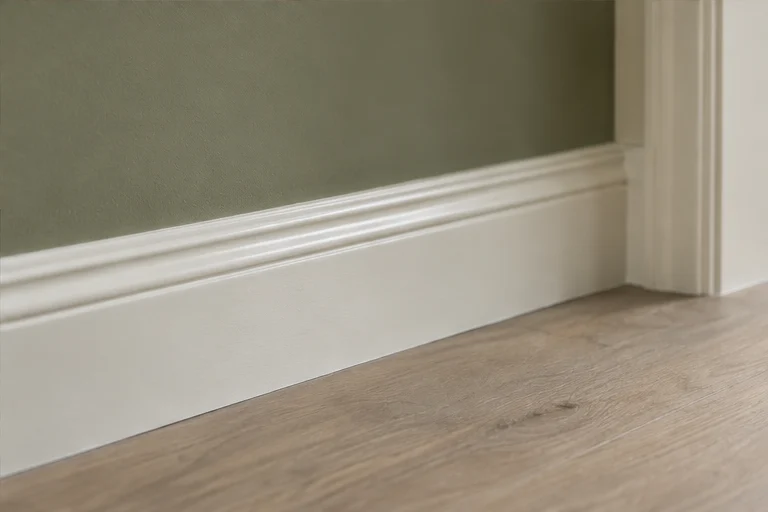
Colour, edge and light.
A closer look at colour, preparation and finishing details.
Kentish Town: questions before decorating.
Should the corridor match my reception room?
It can complement it without sharing the same shade. Compare the two together with the connecting door in its usual position.
Can decorative plaster remain the existing colour?
Yes, discuss retained features during the survey. Their condition and surrounding edges determine what adjacent preparation needs to include.
Do I need to empty the whole home?
Explain which rooms are involved. Agree furniture movement and protection for those spaces, plus the routes needed to reach them.
What if an old repair shows through?
Point it out before quoting so its condition can be assessed and any suitable preparation included in the agreed scope.
How is the price established?
Room size, surface condition, access and selected materials all matter. A free onsite consultation helps turn these into a clear quotation.
Can you quote for another room later?
Discuss the separate room and any shared edges. We can consider a distinct scope rather than assuming it belongs to the first job.
Nearby areas
Camden Town · Hampstead · Highgate · Finsbury Park
LET’S DISCUSS THE DETAILS
Start with the room you have.
Tell us which Kentish Town rooms need attention and what you would like to keep. We can arrange a free onsite consultation and develop a scope around that starting point.